


No. Start with whichever one feels most fixable right now. Small, consistent changes in one area often create momentum that makes the others easier to tackle.

Date: July 13, 2026
The testosterone killers hiding in your everyday routine
You haven't changed all that much on paper; you've got the same job, the same gym membership you keep meaning to use more, the same guy staring back in the mirror, but everything feels harder than it used to, and you can't quite put your finger on why. The energy's thinner, the drive's quieter, and the motivation to do anything past 8 pm has basically left the building.
Many men chalk this up to getting older and leave it there, but the reality is that age is most likely only part of the story. A lot of what men blame on “just getting older” is actually a handful of daily habits quietly working against their testosterone, night after night, drink after drink, missed workout after missed workout.
The good news is these habits can be influenced, and with the right knowledge at hand, you don't need to overhaul your entire life; you just need to know what's happening and make informed decisions about where to make changes.

It's not just about getting older

It is well known that testosterone naturally decreases with age, but what is less well known is that the rate of decline isn't fixed, because it's heavily influenced by things you do (or don't do) every day. Which means a good chunk of what you're feeling isn't inevitable; it's adjustable, and it's exactly why Beyond Alpha starts every conversation about men's health with the daily habits first.
5 daily habits that shape your testosterone
Poor habits often look harmless in isolation, but when they're repeated often enough, they can slowly start to shape how you feel day to day. Sleep, stress, alcohol, and inactivity all influence the environment your body is working with, and so does whether you're giving that environment any extra support.
1. The sleep you keep shortchanging.
Scrolling one more episode, one more inbox check, one more “I'll sleep when I'm dead” night? Research analysing thousands of adults found that sleep duration is linked with serum testosterone concentrations, with the pattern shifting depending on age. For men in their 40s to 60s, getting notably more or less sleep than the recommended range was tied to lower testosterone readings(1).
In short, your sleep habits are linked to your body's chemistry, not just your mood the next morning.
Try this: Pick a wind-down time and stick to it three nights this week; try to build up that consistency. A regular sleep window can do more for your biological environment than any amount of “catching up” on weekends.
2. The stress you carry around like a second job.
Constant background stress keeps your body pumping out cortisol, the hormone built for short bursts of “fight or flight,” not for sitting in traffic every day for a decade. When cortisol stays elevated for long stretches, it competes with the same biological pathways your body uses to support healthy testosterone production. You don't need a stress-free life (let's face it, almost nobody has one), but you do need a release valve.
Try this: Take ten minutes to yourself once a day to do something that isn't related to screens or obligations, such as a walk without your phone, a run, or a swim. This habit can even be as simple as choosing to stretch on the floor while the coffee brews instead of checking your emails or scrolling social media. Build that small, repeatable habit.
3. The extra round you don't think twice about.
A drink or two now and then isn't the villain here, but research pooling data across thousands of men found that regular, heavier alcohol intake was associated with meaningfully lower testosterone and higher estrogen levels compared to men who drank little or none, an effect seen specifically with sustained, chronic drinking rather than the occasional night out(2).
Try this: Pick one night this week to swap your usual drink for water or an alcohol-free alternative; this is a great way to reset your mind to remember you are in control of the habit, not the other way around.
4. The chair you basically live in is not your friend.
Desk, car, couch, repeat. A recent review comparing exercise training against testosterone therapy in aging men found that regular activity meaningfully supports lean muscle, strength, and overall body composition, benefits that in some cases matched or outpaced what hormone treatments alone delivered(3). Movement isn't just about looking better; it's one of the most directly controllable levers you have.
Try this: You don't need to become a gym rat overnight, but try two or three sessions a week of resistance work (bodyweight is fine to start) plus walking more in your daily life; that alone can cover a lot of ground.
None of these first four fixes require a total life reset, but if you stack them, one small win at a time, they become more achievable and can compound.
5. Why the right formula can support the foundation.
The first four are about removing what's quietly working against you. This one's different: it's about adding support once those habits are already underway. Sleep, movement, stress management, and moderation around alcohol all help create the environment your body needs to perform at its best. When those habits are still being built, a targeted formula can help support the biological foundation those habits are working toward.
Try this: Think of it as a support layer for the hard work you're putting in, not another box to tick. Keep building the daily habits that matter, and let a formula like Testosterone Breakthrough™ back them up from the inside.
Backing up the basics
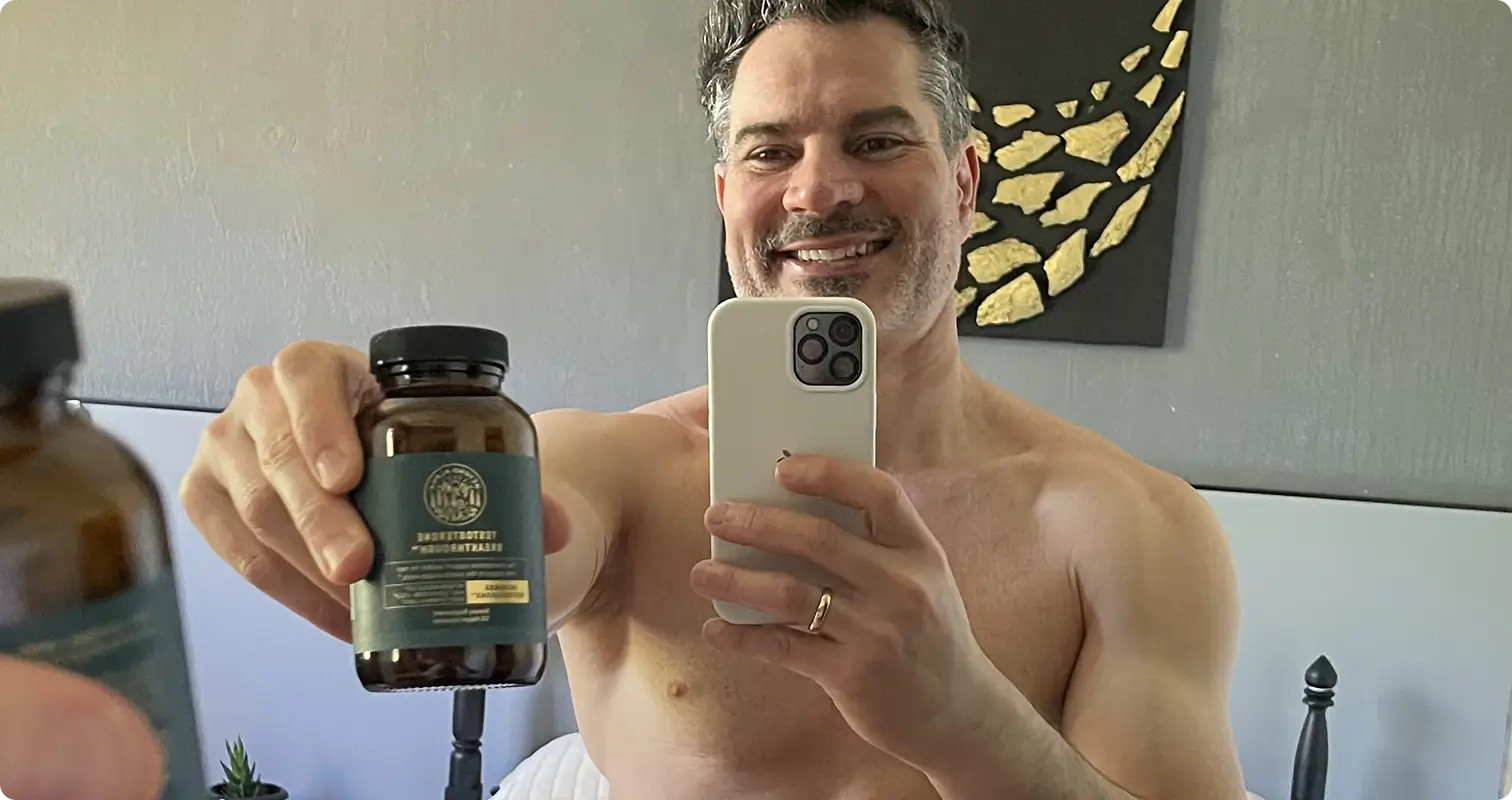
Beyond Alpha built Testosterone Breakthrough™ with fourteen targeted ingredients, including zinc, ashwagandha, fenugreek, tongkat ali, shilajit, and black maca. The formula also includes thiamine (vitamin B1), which contributes to normal cardiac function.
Let the habits above continue their heavy lifting; once those habits are established, the right formula can help create the foundation everything else builds upon.
How do you build better daily habits?
Think of it less like a single fix and more like a comprehensive support system: sleep, stress management, watching the alcohol creep, moving your body regularly.
You don't have to nail all four habits perfectly starting tomorrow, but building healthy habits slowly can create long-term gains that last longer than one-off sprints. Start simple, pick the one that's been nagging at you the most, create a simple and excuse-free habit, and start there.
Getting older doesn't have to mean quietly accepting less energy, less drive, and less of yourself. Most of what's dragging you down is hiding in habits you can actually change, starting today. Handle the basics, and if you want a bit more support in your corner while you do, that's exactly the gap Testosterone Breakthrough™ was built to fill.


Testosterone Breakthrough
Rated 4.8 out of 5 stars
639 Reviews


Original Testosterone Breakthrough is made by Beyond Alpha and available only at beyondalpha.co
Frequently Asked Questions
Do I need to fix all four habits at once to see a difference?
How long does it typically take to notice a difference from lifestyle changes?
It varies by person and by habit. Sleep and stress changes can shift how you feel within a couple of weeks, while changes in body composition from increased activity usually take longer, often a couple of months of consistency.
Who should use Testosterone Breakthrough™?
Testosterone Breakthrough™ is designed for men who want extra support for healthy testosterone levels as part of their daily habits, whether that's men noticing the effects of age-related decline, or younger men wanting to support their foundation as they build habits like sleep, training, and stress management.
References
(1) Hernández-Pérez, J.G. et al. (2024). Association of sleep duration and quality with serum testosterone concentrations among men and women: NHANES 2011–2016. Andrology, 12(3), 518–526. Full text: https://pmc.ncbi.nlm.nih.gov/articles/PMC10788378/
(2) Santi, D. et al. (2024). The chronic alcohol consumption influences the gonadal axis in men: Results from a meta-analysis. Andrology, 12(4), 768–780. Full text: https://onlinelibrary.wiley.com/doi/full/10.1111/andr.13526
(3) Green, D.J. et al. (2024). Comparing the Impacts of Testosterone and Exercise on Lean Body Mass, Strength and Aerobic Fitness in Aging Men. Sports Medicine - Open, 10, 30. Full text: https://pmc.ncbi.nlm.nih.gov/articles/PMC10987448/